Identifying the Color of Your Hedgehog |
*Hedgehogs can only be accurately identified on the color spectrum when they are full grown (around 6 months). Originally White Bellied and Algerian distinctions were actual color differences, back when the two species had not been as hybridized. It was visible in things like the white on the quills (whether it was a true white or more of a cream), mottling on the underside, some variations in the colors themselves, cheek patches, etc. White bellied and Algerian distinctions are no longer relevant, since the two species have been almost completely hybridized.
|
Base Color
Identify the base color. The base color is determined by looking at the skin between the shoulder blades, the mask, ears, and the mottling. The different base colors are as follows:
Black |
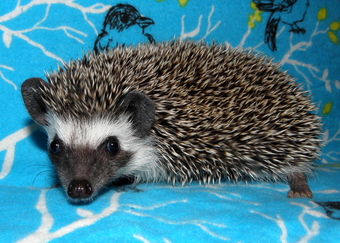
Courtesy of Volcano View Hedgehogs
|
Dark Gray |
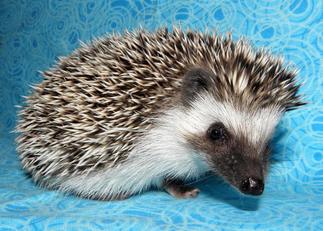
Courtesy of Jean Stockwell
|
Gray |
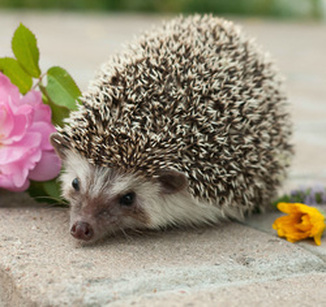
Courtesy of Storybook Hedgehogs
|
Chocolate |
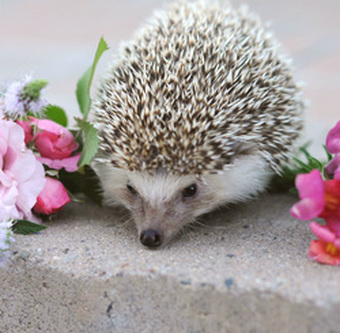
Courtesy of Storybook Hedgehogs
|
Brown |
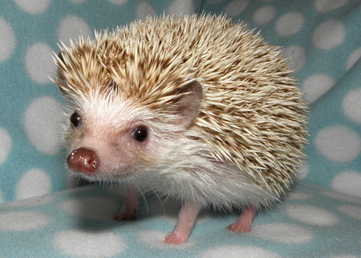
Courtesy of Volcano View Hedgehogs
|
Cinnamon |
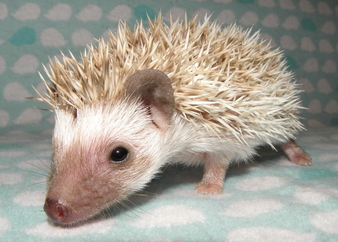
A pinto cinnamon. Courtesy of Volcano View Hedgehogs
|
Cinnacot (dark eyed or ruby eyed) |
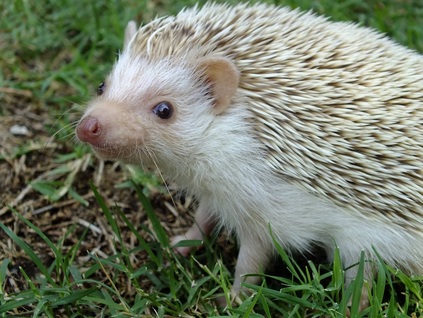
Dark eyed cinnacot. Courtesy of Madison Page
|
Apricot (ruby eyed) |
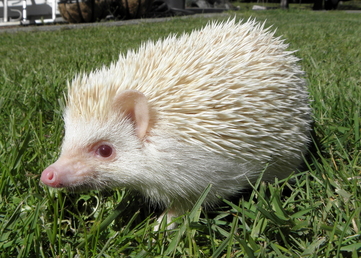
Courtesy of Volcano View Hedgehogs
|
Champagne (coming soon!) |

|
Patterns
Snowflake
|
A snowflake patterned hedgehog has 30%+ white quills mixed in with the banded quills. |
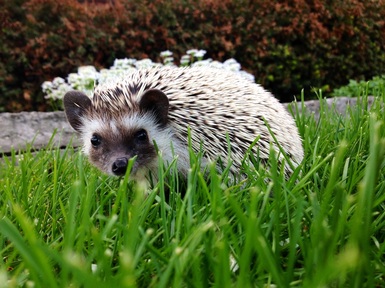
Pod is a dark gray snowflake
|
Pinto (white patches of quills) |
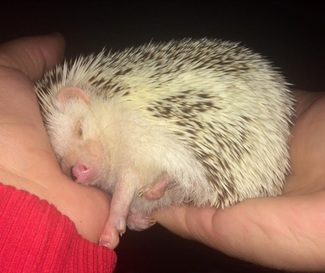
|
High Pinto
|
A high pinto patterned hedgehog has mostly white quills, with a some patches of banded quills. They are different from a reverse pinto. Reverse pintos have no pigment on the face, ears, or feet, while high pintos can have pigment in any/all of those places. |
Reverse Pinto
|
A reverse pinto patterned hedgehog has mostly white quills, like a high pinto. However, reverse pintos have no pigment on the face, ears, or feet. Many reverse pintos have ruby eyes. |
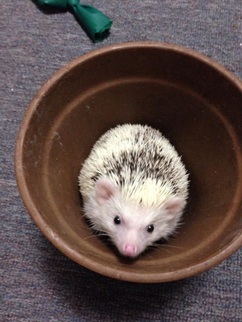
Courtesy of Katie Smart
|
White
|
White patterned hedgehogs have a base color, such as gray. However, 90%+ of their quills are unbanded. The presence of 10% or less banded quills distinguishes them from the double white pattern. |
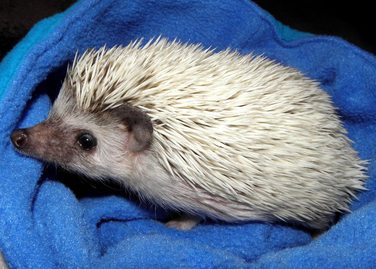
Courtesy of Volcano View Hedgehogs
|
Double White
|
A double white patterned hedgehog has a base color, such as chocolate, but no banded quills. Their mask/ears are consistent with their base color. This pattern is also known as 100% snowflake. |
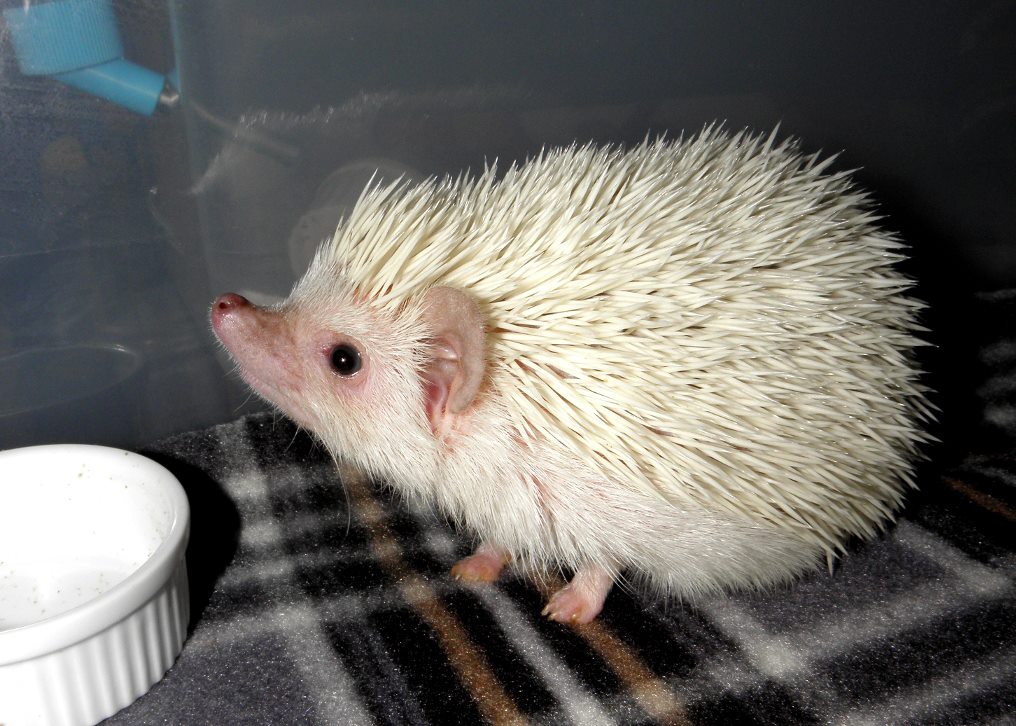
Courtesy of Jean Stockwell
|
Albino
|
An albino hedgehog has no pigment anywhere on its body. There are no banded quills. There is no mask. The eyes are pink/red. |
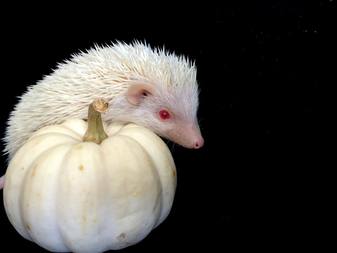
|
Leucistic
|
Also called a full reverse pinto/black-eyed white. A leucistic hedgehog has no pigment on the skin and no banded quills, but possesses black eyes. |
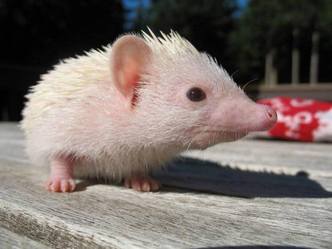
Courtesy of Rebecca Stockwell
|
Markings
Split-face |
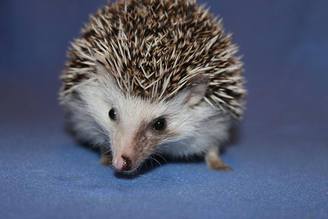
Courtesy of Hannah DeRezza
|
Badger Stripes |
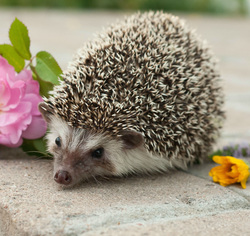
Courtesy of Storybook Hedgehogs
|
Eye Stripes |
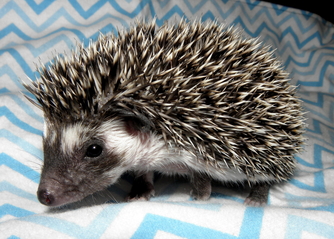
Courtesy of Volcano View Hedgehogs
|
Cheek Patches |
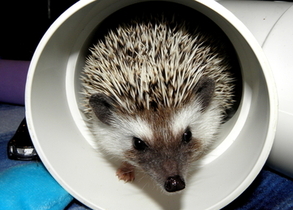
A beautiful example of cheek patches, as well as badger stripes. Courtesy of Volcano View Hedgehogs
|
Full Blaze |
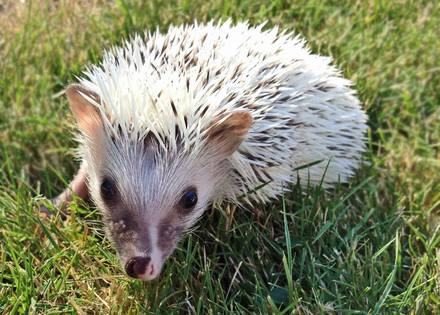
Courtesy of Jean Stockwell
|
Partial Blaze |
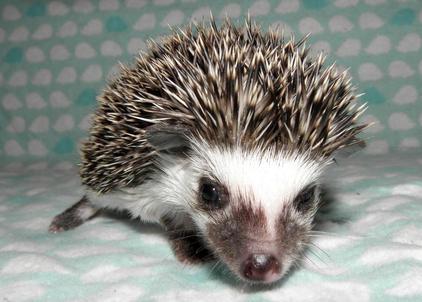
Courtesy of Jean Stockwell
|
Snip |
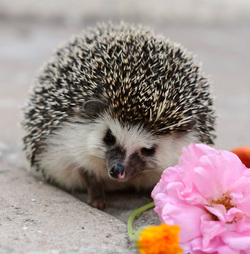
Nickelby has a snip, as well as a partial blaze. Courtesy of Storybook Hedgehogs
|
Eyeliner |
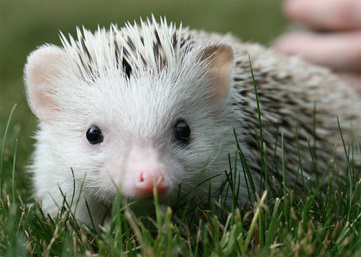
The eyeliner can be seen around the hedgehog's left eye. Courtesy of Volcano View Hedgehogs
|
Smudge |
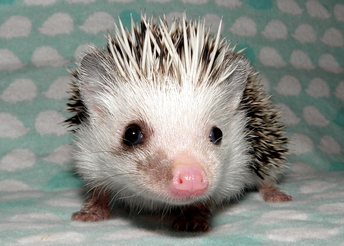
Courtesy of Volcano View Hedgehogs
|
Pinto Face |
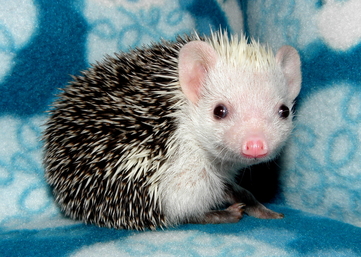
Courtesy of Storybook Hedgehogs
|
Mismatched Ears |
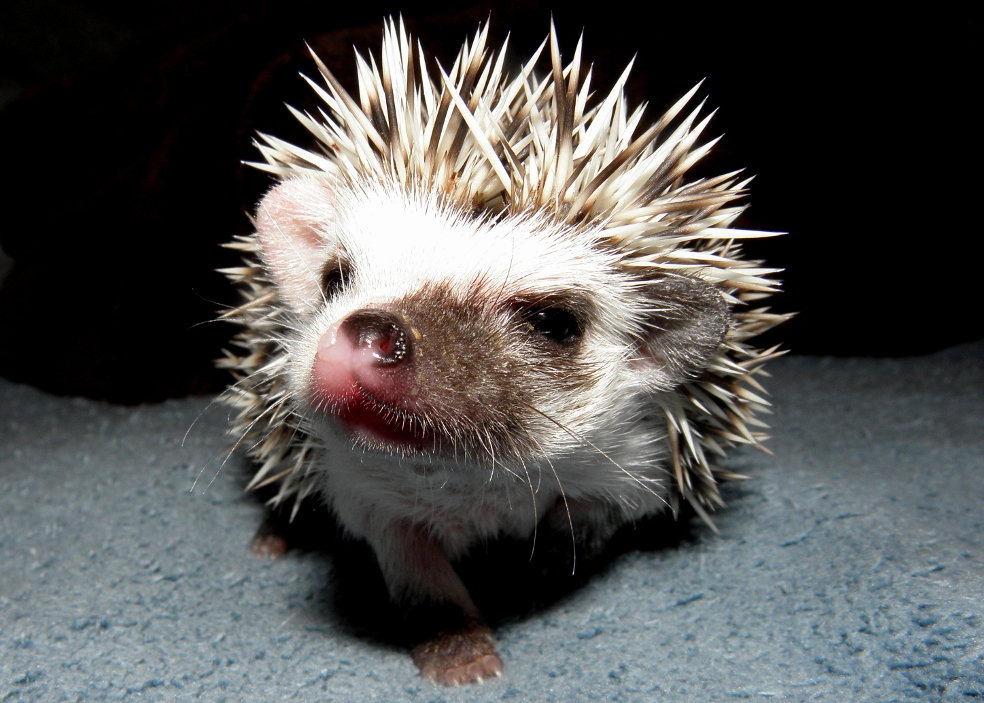
Courtesy of Volcano View Hedgehogs
|
Odd eyes |
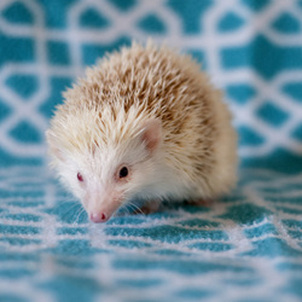
Delirium is an odd-eyed cinnamon reverse pinto, with pinto face. Courtesy of Storybook Hedgehogs.
|
